
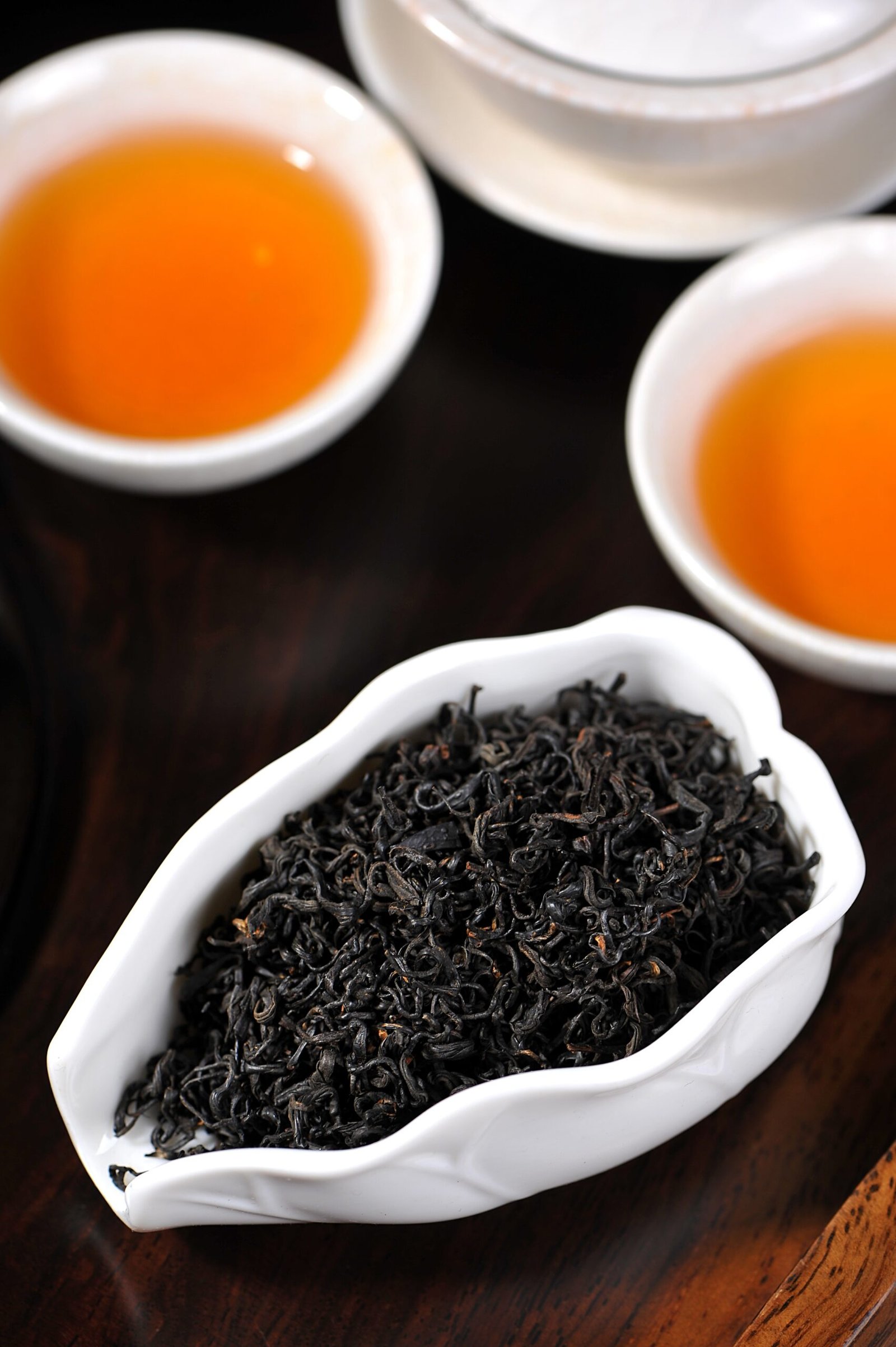
In China, black tea is known as “red tea” (hóng chá), named for its rich, ruby-red liquor. It is fully oxidised, which gives it a bold, robust flavour that is both comforting and invigorating.
Crafting Process
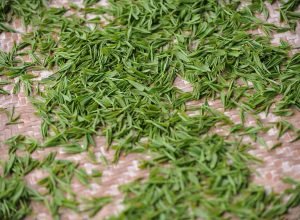
Black tea production begins with withering, which reduces moisture and makes the leaves pliable. The leaves are then rolled to break down cell walls, releasing enzymes that trigger full oxidation. The leaves are spread out in a cool, humid environment and left to oxidise completely – a process that can take several hours. During this time, the leaves turn from green to coppery brown, developing the tea’s characteristic colour and flavour.
Finally, the leaves are dried or fired to stop oxidation and lock in the flavour. Some black teas, such as the famous Zheng Shan Xiao Zhong (Lapsang Souchong), are also smoked over pinewood fires for an additional layer of complexity.
Brewing Recommendations
Black tea is more forgiving than green tea but still benefits from careful preparation.
- Water Temperature: 95–100°C (203–212°F) – freshly boiled water.
- Leaf-to-Water Ratio: 3–5g per 200–250ml.
- Steeping Time: 2–3 minutes. Do not over-steep, as this can extract excess tannins.
- Number of Infusions: 3–4.
Teaware Selection
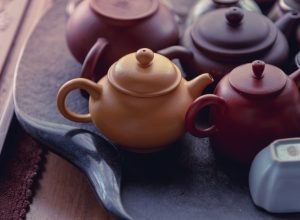
The ideal vessels for black tea are a porcelain gaiwan, a ceramic teapot, or a glass tumbler.
- Porcelain gaiwan – preserves the pure aroma and allows precise control over steeping.
- Ceramic teapot – retains heat well and enhances the tea’s natural sweetness.
- Glass tumbler – perfect for appreciating the beautiful amber-red liquor.
Avoid unglazed clay pots for black tea, as they may mute the delicate fruity and floral notes.
Final Thought
Black tea is the ultimate comfort tea – warm, full-bodied, and deeply satisfying. With the right brewing method, it offers a cup that is both robust and refined, perfect for any time of day.
